Granite is natural stone cut from slabs. Quartz is an engineered surface. That one fact drives most of the differences you will care about as a buyer when weighing granite vs quartz countertops.
This comparison covers cost, durability, maintenance, appearance, heat and stain resistance, lifestyle fit, and resale value. You will see how granite countertops and quartz countertops perform in each area, and where quartz vs. granite trade-offs actually matter day to day.
A practical framework follows: a side-by-side table plus a scenario guide. Use it to weigh granite vs quartz against your own habits, so you finish knowing which material suits your home. Reading granite vs quartz countertops side by side makes the choice clearer.
Key Takeaways
-
Granite is natural stone with unique patterns. Quartz is engineered for consistent color and pattern.
-
Quartz resists stains and chips better. Granite handles heat better.
-
Granite needs sealing every 1–2 years. Quartz needs only mild soap and water.
-
Both materials cost about the same upfront. Quartz saves money on long-term maintenance.
-
Choose quartz for busy households. Choose granite for heat tolerance and natural beauty.
Granite vs Quartz Countertops at a Glance
Comparison Table
The table below summarizes the key differences between granite and quartz countertops. Read it as a starting point, then check the sections that follow for the reasoning behind each row.
| Feature | Granite | Quartz |
|---|---|---|
| Upfront cost (installed) | $50–$100 per sq. ft.; sometimes lower depending on grade | $50–$200 per sq. ft., with builder's grade near $50–$60 |
| Heat resistance | High; tolerates hot pans directly | Limited; resin can discolor above roughly 150°C (300°F) |
| Stain and chip resistance | Porous; needs sealing to resist stains | Non-porous; resists stains and chips better |
| Maintenance | Periodic resealing, typically every 12–24 months | No sealing; mild soap and water |
| Appearance consistency | One-of-a-kind natural variation | Consistent color and pattern, highly customizable |
| Resale perception | Valued as natural stone | Valued as a modern, low-upkeep surface |
How to Use It
Start with the rows that match your daily habits, not the ones that look best on paper. If you cook with high heat often, weigh the heat row heavily; if you want near-zero upkeep, the maintenance row decides it. Then confirm your shortlist with the cost and appearance rows, since quartz countertops and granite countertops often land in similar price bands once installed.
The quartz vs. granite decision rarely comes down to one row. Buyers who prioritize stain resistance and easy care lean toward quartz; buyers who want a unique slab and tolerate sealing lean toward granite. Use the scenario guide later in this article to test your shortlist against real kitchen routines. Explore granite countertops and vanity tops to compare natural stone options.
What Is Granite?
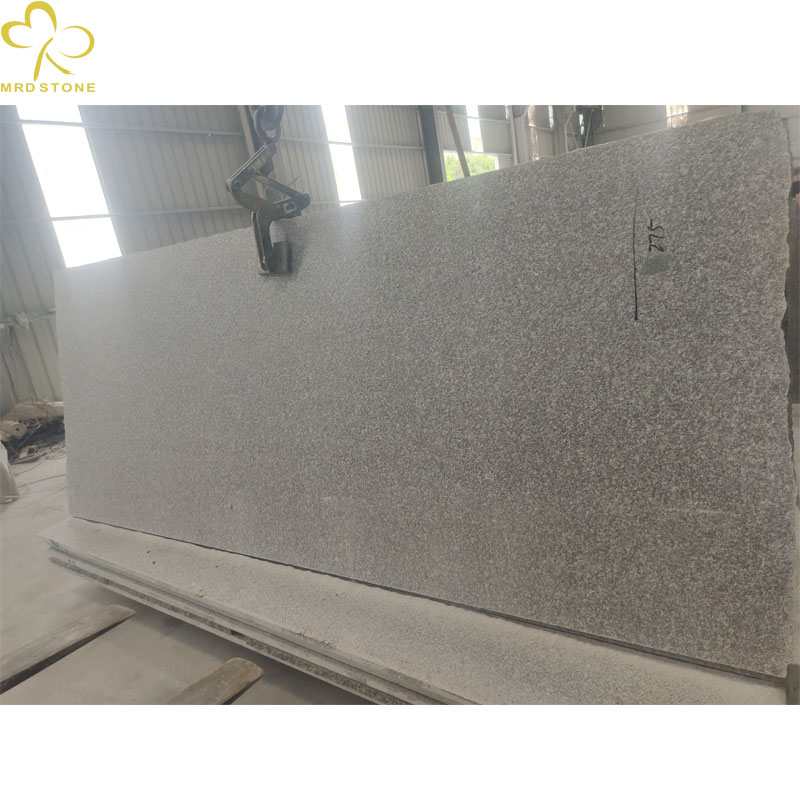
Granite is a natural igneous rock. It forms deep underground as magma cools slowly over millions of years. Workers quarry it in large blocks, then cut and polish those blocks into slabs for countertops.
Composition
Granite's mineral makeup explains its performance as a countertop material. Feldspar dominates the mix, followed by quartz and biotite. The table below shows the typical proportions.
| Component | Proportion |
|---|---|
| Feldspar | 60–65% |
| Quartz | 20–30% |
| Biotite | 5–10% |
| SiO₂ | 70–77% |
| Al₂O₃ | 11–13% |
| Other additives | potassium oxide, sodium, iron, magnesium |
This composition produces a dense, hard stone. Granite rates 6–7 on the Mohs hardness scale. Its low porosity limits water absorption, so the surface resists moisture and weathering. The same density lets granite countertops handle heavy loads and high heat without damage. You can place a hot pan directly on the surface. Care stays simple: avoid harsh chemicals and wipe with a soft cloth. Browse natural granite slabs for different colors, patterns, and surface finishes.
Natural Variation
No two granite slabs look alike. Slow magma cooling and mineral composition drive this variation. Quartz, mica, and feldspar shape the patterns and colors you see. Potassium feldspar often sets a pink or salmon hue, while plagioclase contributes white or gray. Biotite adds dark speckling, and muscovite brings a light shimmer.
Trace minerals and impurities expand the palette further. Hornblende, magnetite, and hematite introduce green, black, and red shades. Iron oxides cause red and pink tones. Geological conditions during formation — temperature, pressure, and cooling rate — affect crystal size and distribution. Slow cooling yields larger crystals and more distinct color variation. Natural weathering over time can also shift the surface color through oxidation.
This one-of-a-kind character appeals to buyers who want a truly unique surface. Each slab carries its own pattern, so your countertops will differ from any other installation.
What Is Quartz?
Composition
Engineered quartz is not a single mined stone. Manufacturers combine ground quartz crystals with resin binders and pigments to create a dense, uniform slab. The table below shows the typical recipe.

| Component | Proportion |
|---|---|
| Crushed natural quartz | 90–95% |
| Polymer resin (polyester most common) plus pigments | 5–10% |
The high quartz content gives the surface its hardness. Quartz rates 7 on the Mohs scale, so it resists scratches well. The resin binder fills the gaps between quartz particles and creates a non-porous surface. This non-porous structure is why quartz countertops resist stains without sealing. You can compare engineered quartz slabs for countertop and interior design projects.
Manufacturers follow a controlled process to turn raw materials into finished slabs:
-
Mix ground quartz aggregate with resin and pigments. Grain size controls the look — coarse grains create a speckled pattern, fine grains produce a uniform surface.
-
Pour the mixture into a mold and compact it under vacuum with vibration and pressure. This step removes trapped air and makes the slab non-porous.
-
Cure the compressed slab in a kiln at roughly 100°C (212°F). Heat permanently hardens the resin binder.
-
Grind the cured slab to a precise thickness and polish it to the final finish.
Engineered Consistency
The manufacturing process gives quartz one clear advantage: predictability. You know exactly what pattern and color you will receive, slab after slab. This consistency matters for large projects that need multiple slabs to match.
Natural stone is valued for one-of-a-kind veining and patterns — no two slabs alike. Quartz, being engineered, offers uniformity: you know exactly what pattern and color you're getting, which is especially appealing for large projects requiring multiple slabs.
Manufacturers can produce designs from solid minimalist shades to intricate patterns that mimic marble or limestone. You get the look of natural stone with lower maintenance and a lower price than marble. The trade-off is character. Engineered quartz lacks the organic, dramatic variation that natural stone provides. If you want a surface with unique mineral movement, quartz will feel too uniform. If you want a clean, consistent look across a large kitchen, quartz delivers exactly that.
Cost Comparison of Quartz Countertops vs. Granite Countertops
Upfront Price Ranges
A cost comparison of quartz countertops vs. granite countertops usually surprises buyers. The overall gap is small. Granite sometimes comes in lower, depending on grade and slab availability. Your granite countertops cost per square foot depends on several factors: quarry location and shipping distance, slab availability, thickness, finish type, and color complexity. Readily available, in-stock slabs lower the price. Exotic colors cost more to source. Standard 3cm slabs avoid added build-up or lamination charges, and polished finishes usually cost the least.
Grade drives much of the spread in granite countertops cost per square foot:
| Grade / Tier | Price (installed per sq ft) | Characteristics & Availability |
|---|---|---|
| Entry-level | $55–$75 | Widely available colors (Santa Cecilia, Ubatuba, New Venetian Gold); high-volume imports, consistent patterns |
| Mid-range | $75–$115 | More distinctive patterns, clearer veining, standout colors (Caledonia, Colonial White, Kashmir White) |
| Premium / exotic | $115–$175+ | Dramatic veining, rare colors (blue, red), unique geological patterns; limited supply |
On the other side, quartz price per square foot runs $50–$200 installed, with builder's grade near $50–$60. That puts quartz kitchen countertops cost in the same band as mid-range granite. Your granite countertop installation cost also includes fabrication and templating, which vary by edge profile and cutouts. For quartz kitchen countertops cost, the slab price already includes a factory finish, so fabrication adds less. Manufacturers and exporters such as XIAMEN MRD STONE CO., LTD supply both granite and quartz, holding ISO9001, NSF, BV, and SGS certifications.
Long-Term Cost of Ownership
Upfront price tells only half the story. Granite countertops cost more to own over time because the stone is porous. Sealing every one to three years costs $100–$200 per application. Over ten years, that adds $500–$1,000. Quartz never needs sealing, thanks to its non-porous resin surface. Ten-year savings with quartz reach $500–$1,200 once you count granite-specific pH-neutral cleaners.
Repairs differ too. Hairline granite cracks can be filled for $100–$300. Edge chips on granite are more common and can be re-profiled for a few hundred dollars. Quartz chips are rarer, but matching an engineered pattern after damage is harder. Full slab replacement is costly for both materials.
Lifespan favors both surfaces. Granite lasts decades when sealed. Quartz typically lasts 15–25 years with proper care, and leading brands offer warranties from 15 years up to a full lifetime. That long service life spreads the granite vs quartz countertops cost difference thin. Weigh the quartz vs granite countertops numbers over ten years, not one. The quartz vs. granite decision often flips once maintenance enters the math. For most households, quartz and granite land close on total spend, and the granite vs quartz choice comes down to how much upkeep you will accept.
The Durability of Quartz Countertops vs. Granite Countertops
Stain, Heat, and Scratch Resistance
The durability of quartz countertops vs. granite countertops splits along one line: what each surface does best. Quartz resists chips and stains better. Granite handles heat better. Neither material wins every test.
Quartz wins the stain contest because its resin binder leaves no pores for liquid to enter. Spilled wine, oil, and citrus sit on the surface until you wipe them away. Granite is porous, so an unsealed slab can absorb liquid and hold a mark. Quartz also holds up better against chipping at edges and around sink cutouts, thanks to its uniform composition.
Heat flips the result. Granite is stone through and through, so a hot pan will not damage a properly sealed slab. Quartz contains resin, and sustained high heat can scorch or discolor that resin. Use a trivet under hot cookware on quartz countertops and granite countertops alike, and never set a hot pan down for long on quartz.
Scratch resistance is close. Both materials rank high on the Mohs hardness scale, so ordinary kitchen use — knives, pots, cutting boards — leaves both surfaces largely intact. Skip the countertop as a cutting board anyway; you will dull your knives.
Sealing and Daily Care
This is where maintenance and durability meet. Granite needs periodic resealing. Quartz needs only routine cleaning with mild soap and water.
How often you seal granite countertops depends on the stone and the room:
| Condition / Location | Recommended Sealing Frequency |
|---|---|
| Most homes (general guidance) | At least once a year |
| High-traffic kitchen, used daily | Every 6 to 12 months |
| Low-traffic areas (e.g., bathroom) | Every 1 to 2 years |
| Denser granite types | Less frequently |
| More porous, less dense granite | More frequently |
You can test whether resealing is due with a few drops of water. Leave them for 3–4 minutes. Water that seeps into the stone means the seal has worn; water that beads means the seal still works.
Sealing is a job you can do yourself:
-
Clean the surface thoroughly, removing dirt and oil so they are not sealed beneath the sealant.
-
Dry the granite completely before applying any sealant.
-
Apply the sealant and spread it evenly across the stone.
-
Allow it to sit for 15–30 minutes so it can be absorbed.
-
Wipe away excess sealant with a soft cloth — leaving excess can dull the countertop.
-
Let the countertop cure for at least 3 hours before using it again.
-
Follow the sealant manufacturer's directions for best results.
Quartz skips all of this. Wipe it with mild soap and water, avoid harsh chemicals, and you are done. That gap in upkeep is the practical heart of the quartz vs granite decision for busy households.
Quartz vs. Granite Countertops: Appearance and Style
Natural vs. Engineered Looks
Granite is nature's artwork. Every slab carries a unique pattern, from subtle speckles to bold, sweeping veins. No two granite countertops ever look the same, and that guarantee of uniqueness appeals to buyers who want a surface nobody else owns.
Quartz is engineered for precision. A controlled manufacturing process delivers uniform color and pattern across every slab, which suits modern designs that seek a clean, cohesive look. The appearance of quartz countertops vs. granite countertops comes down to this: organic randomness against deliberate consistency.

| Visual Attribute | Granite (Natural) | Quartz (Engineered) |
|---|---|---|
| Pattern | Random, natural, rarely repeats | Deliberate, manufactured flow, uniform |
| Veining | Twists and changes direction organically | Linear, artfully placed, symmetrical |
| Color Range | Natural tones (browns, grays, blacks, greens) | Wider range, including bright whites and blues |
| Speckling | Mineral flecks that glitter | Smoother transitions, fewer mineral interruptions |
Color and Pattern Range
Granite offers thousands of unique colors and thousands of unique patterns. Slabs often show natural movement, so the veining shifts direction as your eye travels across the surface. That movement gives granite countertops a depth no printed pattern can copy.
Quartz palettes are somewhat limited compared to granite, yet a full range of colors is available. Major manufacturers have significantly expanded their palettes in recent years, and consistent, uniform patterns appeal to many buyers who prefer calm over movement.
One practical advantage stands out. Quartz can mimic marble at a lower price and with lower maintenance. You get the marble look without the sealing routine that natural stone demands. Weigh that option carefully when you compare quartz and granite for a busy kitchen. The quartz vs. granite decision often turns on how much visual drama you want and how much upkeep you will accept. For a closer look at engineered patterns, browse Calacatta white quartz slabs.
Which Fits Your Lifestyle?
Your daily routine decides more of the quartz countertops vs. granite countertops question than any spec sheet does. The table below maps common kitchen situations to each material's strength.
| Usage Scenario | Quartz Performance | Granite Performance | Which Outperforms |
|---|---|---|---|
| Stain-prone spills (wine, coffee, oil) | Non-porous; liquids sit on top and wipe away | Porous; needs sealing and quick spill attention | Quartz |
| Busy, low-maintenance households | Basic cleaning only; no sealing schedule | Regular sealing and careful spill management | Quartz |
| High-traffic islands | Preferred for heavy-use islands | Common on main counters but needs upkeep | Quartz |
| Heat exposure (hot pans) | Resin can suffer damage from prolonged heat | Hot pans can go directly on the surface | Granite |
| Outdoor or UV exposure | Indoor use only; UV yellows the resin | Suits heat and outdoor durability needs | Granite |
Scenarios That Favor Quartz
Quartz suits households that want a surface to work around their schedule, not the reverse. Consider these cases:
-
Busy families with kids and high-traffic kitchens who want no maintenance schedule — quartz is non-porous and needs no sealing.
-
Cooks who spill wine, coffee, or oil and want to wipe up without worry.
-
Kitchens where a uniform, modern look matters.
-
Indoor-only installations away from direct sunlight or UV-heavy spaces.
-
Sellers targeting younger buyers — quartz holds 36% of U.S. countertop installations as of 2026 and ranks as the top choice among millennial and Gen Z homebuyers.
Picture a Round Rock family with three kids and a packed weeknight cooking schedule. Spills wipe clean with no staining risk and no sealing required, which eliminates $150–$250 in recurring sealing costs. That family is a textbook quartz household.
Scenarios That Favor Granite
Granite rewards cooks who value heat tolerance and natural character. A baker who pulls sheet pans straight from a hot oven will appreciate a surface that takes the heat without complaint.
Granite is more heat resistant than quartz: almost anything from the oven or stovetop can go on granite without damage, whereas hot pots and pans can burn a quartz countertop.
Outdoor kitchens and sun-drenched spaces also point to granite, since standard quartz stays indoors. If you plan a kitchen remodel around a one-of-a-kind slab and you accept annual sealing, granite countertops deliver character that engineered surfaces cannot copy. Weigh quartz and granite against your real habits, and you will find the best countertop for your kitchen without guesswork.
Resale Value and Buyer Perception
What Buyers Notice
Resale value depends on what buyers see and how they read it. Both materials perform well here, and the gap is smaller than most homeowners expect.
| Dimension | Granite | Quartz |
|---|---|---|
| Perceived prestige | Wins in high-end neighborhoods; natural stone signals quality and longevity | Less tied to prestige in luxury segments; may read as a downgrade in $750k+ homes |
| Modernity and maintenance | Needs sealing; some buyers value the patina | Wins with younger buyers (28–42) for no sealing, stain resistance, and a modern look |
| Resale premium | Roughly +5–7% of total home value | Roughly +5–7% of total home value |
| Regional preference | Southern suburbs favor natural stone | Denver proper and Littleton lean slightly toward quartz |
| Timeline guidance | Better for 7+ year stays in upscale markets | Safer for 3–5 year stays and efficiency-minded buyers |
Quartz countertops consistently rank as the top performer across the widest range of home types and price points. Durability, low maintenance, design versatility, and strong buyer recognition drive that result. Granite countertops come a close second, particularly in mid-range to luxury properties where natural stone carries real prestige. Together, quartz and granite deliver the strongest mix of durability, aesthetics, and broad appeal.
Matching Material to Home Style
Match the surface to the house, not to a trend. In an upscale market, natural stone can justify a premium. In a starter home or a fast resale, a low-maintenance surface appeals to efficiency-minded buyers.
Think about your timeline before you commit to a kitchen remodel. A short stay favors the surface that asks nothing of the next owner. A long stay in a prestige market gives granite room to earn its keep. Either way, the granite vs quartz choice rarely sinks a sale on its own.
The core trade-off is simple. Granite gives you one-of-a-kind natural stone, and you accept sealing upkeep in return. Quartz gives you engineered consistency with near-zero maintenance. Neither surface wins on every point.
Weigh upfront cost against long-term care and lifestyle fit. Do not choose on looks alone. A busy household and a weekend baker will value different strengths in the granite vs quartz countertops debate.
View and touch actual samples before you decide. Visit a slab yard for granite, since color and pattern read very differently in person. Handle a few quartz vs. granite samples side by side, and the right countertops for your home will become clear.
FAQ
Does quartz or granite resist heat better?
Granite wins on heat. You can set a hot pan on a sealed granite slab without damage. Quartz contains resin, and sustained heat above roughly 150°C (300°F) can scorch or discolor that resin. Use a trivet on quartz surfaces either way.
How often do you seal granite countertops?
Most homes need sealing at least once a year. A daily-use kitchen may need it every 6 to 12 months. Test with a few water drops: water that beads means the seal still works, and water that seeps in means it is time to reseal.
Is quartz more stain resistant than granite?
Yes. Quartz is non-porous, so wine, oil, and citrus sit on the surface until you wipe them away. Granite is porous, and an unsealed slab can absorb liquid and hold a mark. Sealing closes that gap, but quartz needs no sealing at all.
Which material lasts longer?
Both last a long time. Granite lasts decades when you seal it. Quartz typically lasts 15–25 years with proper care, and leading brands back it with warranties from 15 years up to a full lifetime. The granite vs quartz lifespan gap is small in practice.
Can quartz mimic marble?
Yes. Quartz can copy the marble look at a lower price and with lower maintenance. You get the veined appearance without the sealing routine that natural stone demands. Check a physical sample, since pattern and color read very differently in person.