You stand in the showroom, torn between two white surfaces with bold gray veins. One offers the drama of natural stone. The other promises easy living. This calacatta quartz vs natural calacatta marble decision feels bigger than a countertop.
Here is the core difference. Calacatta quartz is an engineered quartz stone. Manufacturers bind ground quartz with resin to create a non-porous slab. Natural calacatta marble comes straight from the quarry. Each slab carries genuine, one-of-a-kind character, yet it asks for more careful handling.
Your choice shapes daily life. Think about performance, durability, and maintenance before you commit. A fair comparison weighs looks, toughness, upkeep, and cost. Match the material to your habits, your budget, and your design goals. Then you can choose with confidence.
Key Takeaways
- Calacatta quartz is non-porous and resists stains, scratches, and acids. It needs no sealing and suits busy kitchens.
- Natural Calacatta marble is porous and softer. It requires sealing every 6 to 12 months and careful cleaning to avoid etching.
- Calacatta quartz offers consistent patterns and lower upfront and long-term costs. Natural marble provides unique veining and authentic beauty at a higher price.
- Choose quartz for low-maintenance, high-traffic areas. Choose marble for luxury spaces where you value natural character and can handle the upkeep.
- Always check supplier certifications and inspect the actual slab before buying to ensure quality and consistency.
Defining Calacatta Quartz and Natural Calacatta Marble
What Is Calacatta Quartz?
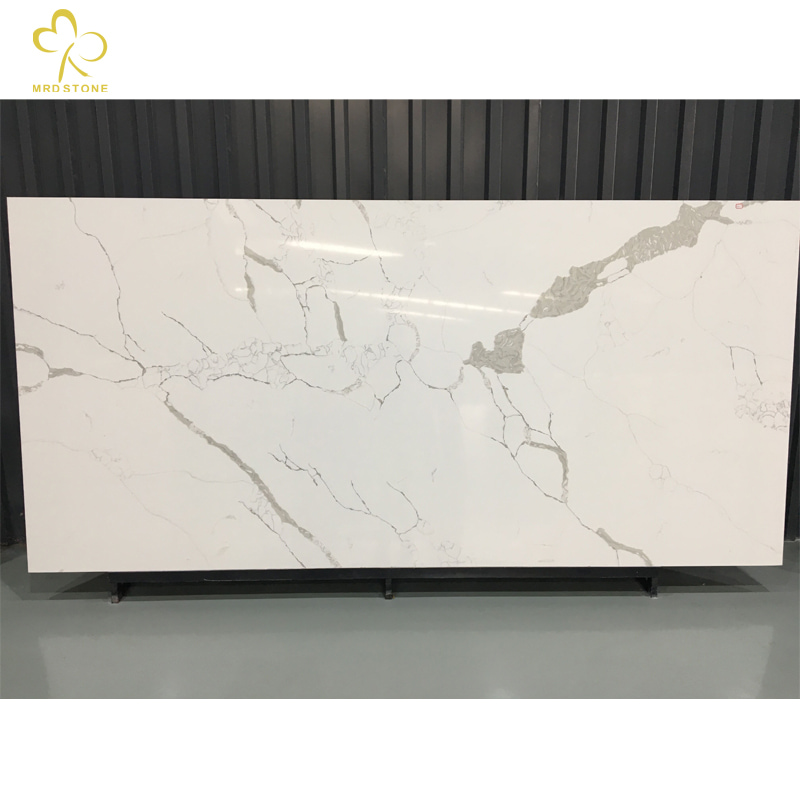
Calacatta quartz is an engineered stone. Manufacturers grind natural quartz and bind it with resin, pigment, and small amounts of other minerals. The result is a non-porous slab with a pattern designed to mimic Calacatta marble. You get a bright white field and bold gray veins, yet the pattern comes from a controlled production line rather than a mountain.
That control is the point. A calacatta-look quartz slab repeats the same look from batch to batch, so a large island and a backsplash can match closely. Engineered calacatta quartz also lets you choose a vein style, soft and feathery or sharp and dramatic, before you commit. Many buyers pick engineered quartz for this predictability alone.

What Is Natural Calacatta Marble?
Natural calacatta marble is quarried stone. The Apuan Alps of Tuscany, Italy, host the most prestigious deposits, and Calacatta is a rarer variety than Carrara. Typical slabs show a bright white background with bold veining in gray, gold, or beige. Calacatta Borghini, Calacatta Bettogli, Calacatta Gold, and Calacatta Macchia Vecchia each carry a distinct character. Not all Calacatta is Italian, since Calacatta Lincoln comes from Colorado, but most premium slabs originate in Italy.
Provenance matters when you compare calacatta quartz and natural calacatta marble. Natural marble varies from block to block, so inspect your actual slab, not a small sample. Certification also helps. A supplier holding all four credentials below gives you a useful benchmark.
| Certification | What it verifies |
|---|---|
| ISO9001 | Quality management systems |
| NSF (ANSI 51) | Food-contact safety |
| BV | Factory strength/capability |
| SGS | Global audits |
Manufacturers such as MRD STONE supply both natural and engineered stone. Ask any vendor for certificates and check slab consistency before you buy. Whether you weigh calacatta quartz and calacatta marble side by side or compare calacatta quartz and marble across brands, the same rule applies: confirm the paperwork, then confirm the slab. You can also explore the natural marble slab collection to compare natural stone options.
Aesthetics: Calacatta Quartz vs Natural Calacatta Marble
Veining, Color, and Consistency
Look closely at both surfaces, and the difference in character becomes clear. A calacatta quartz slab starts from a controlled white canvas. Pigments and resins set the base tone, and the veining follows a designed path. Natural stone works the other way around. Its color shifts subtly across the slab, and small imperfections appear where geology placed them.
The table below summarizes how the two surfaces differ in pattern and tone.
| Attribute | Natural Calacatta Marble | Calacatta Quartz |
|---|---|---|
| Veining pattern | Irregular, organic veins that flow unpredictably; veins run through the full depth of the stone; no two slabs repeat exactly | Veins appear on the surface layer and follow more consistent, repeating patterns created during manufacturing; may show subtle repetition across large installations |
| Vein color | Shades of gray, gold, or purple/taupe | Engineered veining designed to mimic marble, typically softer and more evenly distributed |
| Vein thickness and spacing | Thicker veins, more widely spaced, creating bold dramatic contrast | More uniform vein density and paths, easier to match across pieces |
| Background color | Bright white with subtle natural color variations and imperfections | More controlled, uniform base color achieved through pigments and resins |
Consistency is where calacatta quartz and calacatta marble part ways most sharply. A calacatta-look quartz design is manufactured to a fixed specification, so slabs from the same design generally match one another. Many designs show low slab-to-slab color variation, which means a kitchen island, backsplash, and perimeter counters can share one continuous look.
Batch control still deserves your attention. Follow these steps when you order:
- Approve the batch before you pay a deposit.
- Avoid mixing batches in one visible zone unless you accept the variation.
- Check finish and thickness alongside color, since these can shift between production runs.
Authenticity and Natural Variation
Genuine calacatta marble offers something no production line can copy. Each slab forms naturally, so no two pieces are identical. Veins range from cool gray to warm gold, and they flow with varying thickness and intensity. Some read as delicate wisps. Others land as bold dramatic strokes. This organic variation gives every installation a sense of exclusivity.
Designers treat that variation as an asset. Contrasting colors can emphasize the gray-on-white veining and create visual tension. Cleaner, more uniform slabs let subtlety dominate in minimalist schemes. The stone's tonal range, from crisp white to warm beige and soft gold, suits both traditional and contemporary interiors. A feature wall or countertop in natural marble anchors a luxury room with quiet confidence.
The calacatta quartz vs natural calacatta marble choice therefore comes down to your design goal. A calacatta quartz that looks like real marble delivers repeatable, uniform beauty, and that predictability suits modern minimalist spaces. Natural marble brings authentic luxury, evolving character, and a patina that develops over time. Neither look is superior. One favors control, and the other favors nature. Compare calacatta quartz and marble against your own design intent, and the answer usually becomes obvious.
Durability and Maintenance of Calacatta Quartz
Porosity, Staining, and Etching
Everyday spills test a surface fast. Here the calacatta quartz vs natural calacatta marble comparison turns practical. A calacatta quartz slab is engineered to be non-porous. Ground quartz makes up roughly 90 to 95 percent of the slab, and polymer resins bind the rest. Moisture and liquids cannot soak in, so you never need to seal it.
| Material | Water Absorption / Porosity |
|---|---|
| Calacatta quartz | Non-porous engineered surface (~90–95% ground quartz + polymer resins); resists moisture and liquid penetration; no sealing required |
| Natural Calacatta marble | Naturally porous (metamorphosed limestone with microscopic pores); absorbs water and liquids; without sealing, spills absorb within minutes and cause staining; resealing every 6–12 months recommended |
Acids separate the two materials even further. Natural calacatta marble contains calcium carbonate, and that mineral reacts with vinegar, lemon juice, wine, and some cleaners. The reaction leaves dull white etch marks on the polished face.
Marble etching is described as nearly impossible to prevent in a working kitchen: a slice of lemon falling on the counter reacts with the calcium carbonate in the stone, leaving a dull white etch mark "in seconds." Calacatta quartz, by contrast, is characterized as an acid-resistant material that does not suffer this chemical weakness—vinegar, tomatoes, and citrus can be used without panic, and the polished finish remains consistent and glossy over time rather than developing the damage "patina" of natural stone.
The resin binders in engineered quartz do not react with acids the way calcium carbonate does. Your finish stays glossy through regular acidic food exposure. This single difference explains much of the gap in porosity, staining, and daily use between the two stones.
Sealing, Scratching, and Heat
Hardness decides how a surface handles knives, pans, and grit. Calacatta quartz rates 7 on the Mohs scale because of its high quartz crystal content. Natural marble sits at 3 to 4, so it is more porous and softer than quartz and scratches more readily from sharp objects, sand particles, or abrasive cleaners.
- Calacatta quartz: rated 7 on the Mohs scale; resists scratching, chipping, and everyday wear; withstands cutting board use and daily cleaning without visible surface change.
- Natural Calacatta marble: rated 3 to 4; develops scratches, etches, and surface wear within months of regular use.
Sealing is the other ongoing task. Most kitchen marble needs a fresh seal every 6 to 12 months, per Natural Stone Institute guidance and common fabricator advice. A bathroom vanity in marble often stretches to 2 to 3 years between coats. Honed marble absorbs sealer faster than polished marble. The water test is your practical trigger: if droplets bead, the seal still works; if water absorbs and darkens the stone, reapply.
Treat this as a trade-off, not a flaw. Marble rewards careful ownership with lasting beauty. Quartz removes most upkeep risk from your calacatta quartz countertops. Weigh durability and maintenance against your habits, and the right surface for your kitchen countertops becomes clear. For more engineered stone choices, see Calacatta white quartz stone slabs.
Cost: Calacatta Quartz and Calacatta Marble Compared
Upfront Price Range
Budget talks first for most buyers. A calacatta quartz slab typically runs from $60 to $140 per square foot installed, and quality shifts across that range. Entry-level slabs sit near the bottom. Denser, more realistic designs climb toward the top. Installation adds another layer, and labor fees vary by location.
| Cost Component | Price Range (per sq. ft.) |
|---|---|
| Calacatta quartz (installed) | $60 – $140 |
| Installation fees (varies by location) | $30 – $60 |
Natural calacatta marble sits higher on the upfront scale. Quarrying, extraction, and shipping all push the price upward, and rarity drives a premium on top. A premium natural calacatta marble slab often costs more per square foot than most engineered quartz. Supply also plays a role. Manufacturers produce engineered quartz stone in predictable batches, so pricing stays stable. Natural marble depends on what the quarry yields.
Long-Term Maintenance Costs
Upkeep changes the math over time. Natural marble needs professional sealing every 6 to 12 months at $200 to $400 per service. You also buy specialized cleaning products at $50 to $100 per year. Calacatta quartz needs no sealing, and standard supplies cost $20 to $40 per year.
This cost comparison favors quartz across a decade of ownership. A calacatta quartz and marble comparison therefore splits into two profiles. Quartz front-loads the expense and lowers long-term care. Marble spreads the premium across purchase and upkeep. Neither path is cheaper in every case. Your calacatta quartz countertops deliver predictable costs, while natural stone rewards you with character at a higher total outlay. Run the numbers for your own kitchen countertops before you decide.
Environmental Considerations for Calacatta Quartz and Calacatta Marble
Sourcing and Composition
The two materials begin in very different places. A Calacatta quartz slab starts in a factory. Manufacturers grind quartz minerals and bind them with resin, pigment, and other additives. The resin holds the slab together, and its quality matters. Low-quality resin emits excessive VOCs, causes pungent odors in the workshop, and fails to meet environmental standards. Reputable makers now invest in cleaner production technologies. These upgrades cut volatile organic compounds and greenhouse gas emissions across all quartz categories, including engineered quartz.
Natural Calacatta marble follows a shorter path. Workers quarry the stone, cut it into slabs, and polish the surface. No binder enters the process. You can compare the two options on several environmental features:
- Recycled content, post-consumer or post-industrial
- Low-VOC binders and resins
- Certified manufacturing, such as NSF, Greenguard, or LEED credits
- Long product lifespan and low maintenance
Ask your supplier which of these apply to the engineered quartz stone you are considering.
Lifespan and Sustainability
Service life drives the environmental math. A surface you replace often consumes more resources over time. The table below shows typical lifespans for each category.
| Material Category | Lifespan |
|---|---|
| Natural marble (incl. Calacatta marble) | 50 to 100+ years (requires high maintenance) |
| Marble-look quartz (incl. Calacatta quartz) | 25 to 30 years (virtually maintenance-free) |
Natural stone wins on raw longevity. Engineered quartz wins on low upkeep, and that difference shapes real-world replacement rates. A well-maintained Calacatta marble surface can serve a home for generations. A quartz surface rarely needs replacement during normal use.
Choosing durable materials is also an environmental decision. Replacing a countertop after seven years due to damage is a waste of resources, and longevity is a key component of eco-friendly building.
Weigh durability alongside lifespan when you compare calacatta quartz and natural calacatta marble. Each material supports sustainability in its own way. Marble offers decades of service with careful ownership. Quartz offers decades of service with minimal intervention. Your calacatta quartz and marble comparison should therefore include how long you expect the surface to last and how much care you will give it.
Choosing Calacatta Marble or Calacatta Quartz for Your Project
Matching Material to Lifestyle and Application
Your daily habits should drive this decision more than any showroom display. Designers commonly specify calacatta quartz for high-traffic kitchens and bathrooms where performance outweighs the pull of natural stone. Family kitchen islands, bathroom vanities, and commercial food prep areas all suit it well. A non-porous surface also stops bacteria from soaking in, which matters when you wipe up after messy eaters.
Think honestly about how you live. Serious home cooks, households with children, and hosts who dislike policing coasters tend to relax with quartz. A calacatta quartz slab handles spills, crafts, and red wine without anxiety. Marble rewards a different temperament. It resists heat well and stays cool for pastry work, yet tomato sauce, citrus, and wine demand immediate cleanup. Some owners love the patina. Others find the vigilance tiring.
Calacatta quartz has a clear durability advantage: being non-porous, it resists staining, scratching, and heat, making it ideal for high-traffic areas such as kitchens and bathrooms, with straightforward maintenance via mild soap and water.
Aligning with Design Goals and Budget
Authenticity carries real value for some projects. Choose natural calacatta marble when you want historical character, one-of-a-kind veining, and a surface that ages with grace. Luxury bathrooms and heritage-style spaces showcase it beautifully. Pair it with a budget that absorbs recurring care, since sealing every 6 to 12 months adds up.
| Cost Category | Calacatta Marble | Calacatta Quartz |
|---|---|---|
| Material per sq ft | $150–$250 | $60–$140 |
| Installation per sq ft | $80–$100 | $20–$50 |
| Total installed per sq ft | $150–$350+ | $60–$140 |
Combined material, installation, and sealing typically make marble 20–40% more than premium quartz. Whichever direction you take, verify certifications such as ISO9001 and NSF, then inspect your actual slab for consistency. That checklist protects you when selecting materials for countertops, backsplashes, and other architectural surfaces. You can view MRD Stone's Calacatta Gold quartz engineered stone for another design option.
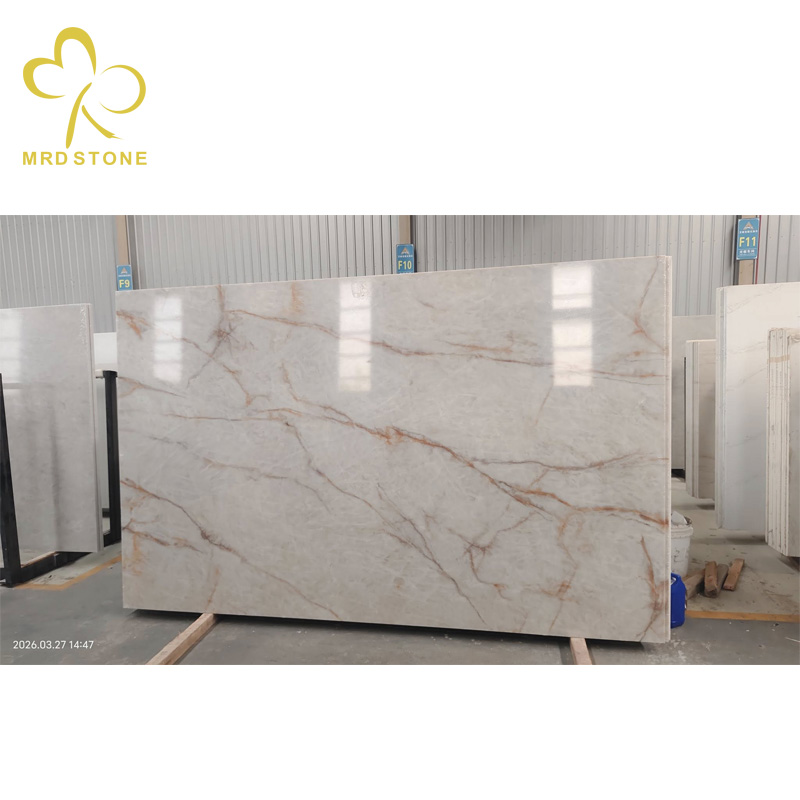
Your calacatta quartz and marble comparison now comes down to two clear profiles. A Calacatta quartz slab wins on durability and low maintenance. Calacatta marble wins on authenticity and one-of-a-kind natural beauty.
No single material suits every buyer. Your lifestyle, budget, and design goals should guide the final call. Use the points above as a checklist: appearance, toughness, upkeep, and cost. Then verify supplier certifications such as ISO9001 and NSF, and inspect your actual slab before you buy. That step protects your investment and confirms the surface you receive matches the surface you chose.
FAQ
Does a Calacatta quartz slab need sealing?
No. A Calacatta quartz slab is non-porous, so liquids cannot soak in. You skip the sealing routine entirely. Natural Calacatta marble is porous and needs a fresh seal every 6 to 12 months. That single difference saves you both time and recurring service fees.
Can I use either material outdoors?
Think twice before you place natural Calacatta marble outdoors. Sun and weather accelerate wear on a porous, softer stone. Engineered quartz handles moisture well, yet direct sunlight can affect resin over time. For covered outdoor kitchens, ask your fabricator about UV stability before you commit.
Which surface handles heat better?
Natural Calacatta marble wins here. It tolerates hot pans better than resin-bound stone. Engineered quartz can discolor when a hot pot sits directly on the surface. Use trivets with both materials, and never place a pan straight from the stove onto either countertop.
How long will each surface last?
A well-maintained Calacatta marble surface can serve a home for 50 to 100+ years. A Calacatta quartz slab typically lasts 25 to 30 years with normal use. Both deliver decades of service. Your care habits and replacement plans should guide the final call.
Which option suits a busy family kitchen?
Choose calacatta quartz countertops for a busy household. The non-porous surface resists stains, scratches, and etching from citrus, wine, and tomato sauce. You clean with mild soap and water. Natural marble rewards careful owners, yet it demands quick spill cleanup and periodic sealing. Match the material to your daily routine.