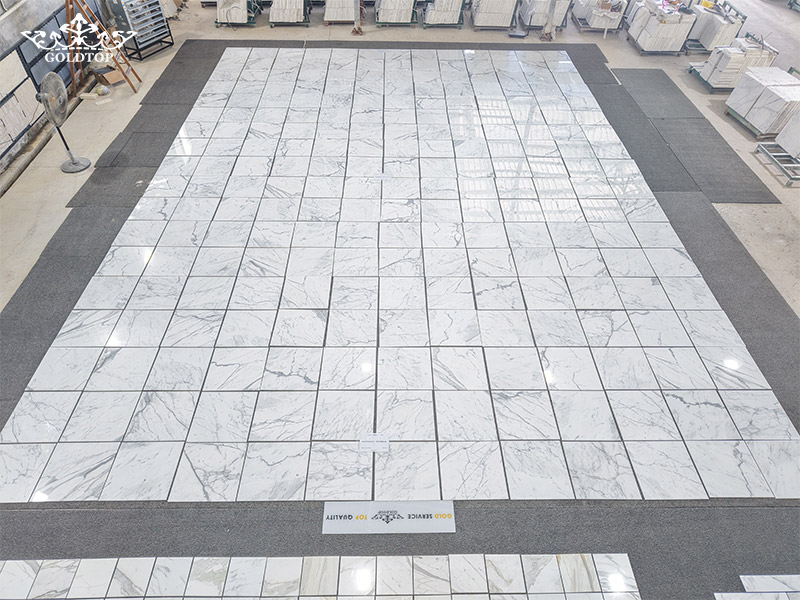
Statuary Marble, often recognized for its clean white background and distinctive natural veining, is widely used in high-end residential, hospitality, and commercial interiors. From statuary marble slabs to wall cladding and statuary marble tiles, its bright appearance can create a refined and timeless look.
However, the same characteristics that make Statuary Marble attractive also make it more demanding to process. Its relatively soft and brittle nature means that material selection, cutting, finishing, packing, and installation all require careful control.
Based on our recent project involving Statuary Marble wall and floor tiles, we have summarized several key considerations for processing this material.
1. Carefully Select Blocks Before Slab Production
Statuary Marble can vary significantly in background color, veining, and overall visual character from one block to another. When a project requires a large quantity of stone, selecting blocks with a consistent appearance should be the first step.
Before purchasing or opening blocks, the required quantity should be calculated according to the actual shop drawings and layout.
It is important not to estimate the required amount simply by comparing the total square footage of the project with the theoretical yield of the blocks. The dimensions and arrangement of individual pieces should be considered to calculate the expected yield more accurately.
For larger projects, we recommend grouping the selected blocks together and checking their background color and veining under wet conditions before production. If noticeable differences are found, the blocks should be reconsidered before they are cut into slabs.
This early selection process helps reduce the risk of having to source additional blocks later, when matching material may be difficult to find.
2. Inspect the Slabs Again After Cutting
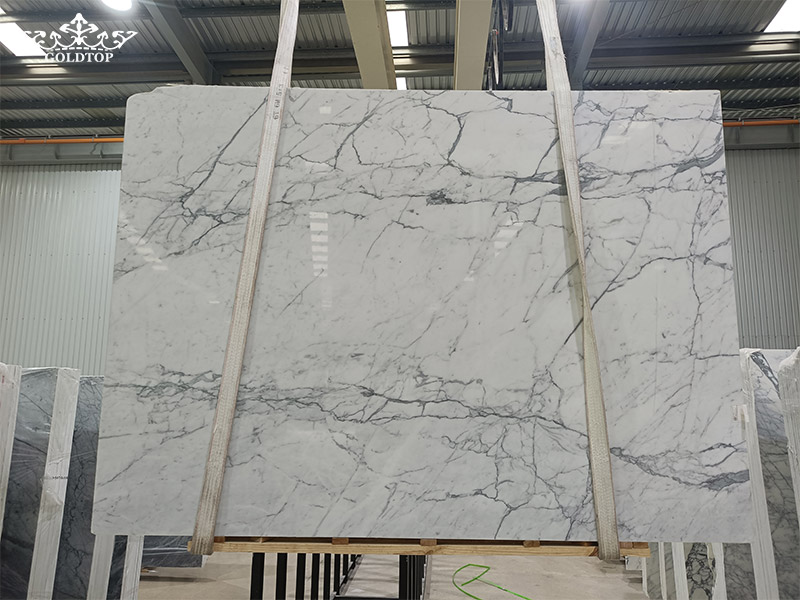
Selecting a good block does not guarantee that every finished slab will be perfect.
Natural stone can reveal internal cracks, color variations, mineral spots, or other characteristics after the block is opened. Therefore, statuary marble slabs should be inspected again after cutting.
Depending on the location and severity of the natural characteristics, individual slabs may be:
- Selected for use in less visually demanding areas
- Cut to remove defective sections
- Repaired and processed where appropriate
- Rejected when the quality does not meet the project requirements
For this reason, experienced material selection and a second inspection after slab production are both important for high-end Statuary Marble projects.
3. Consider Vein Matching Before Cutting
Unlike some highly linear marbles, Statuary Marble often has naturally varied veining. In many projects, designers only require consistency in overall background color and vein character rather than strict vein matching.
However, if a project requires vein matching or bookmatching, the layout should be prepared before cutting.
The selected slabs should be numbered, photographed, and measured. The slab images can then be digitally arranged according to the project drawings to determine the position and cutting sequence of each piece.
Once the layout is approved, the cutting sequence should follow the approved layout rather than being changed simply to improve material yield.
Vein matching can significantly improve the final visual effect, but it also increases:
- Material waste
- Cutting complexity
- Fabrication time
- Installation requirements
- Overall project cost
Therefore, whether strict vein matching is necessary should be discussed with the owner and design team at the beginning of the project.
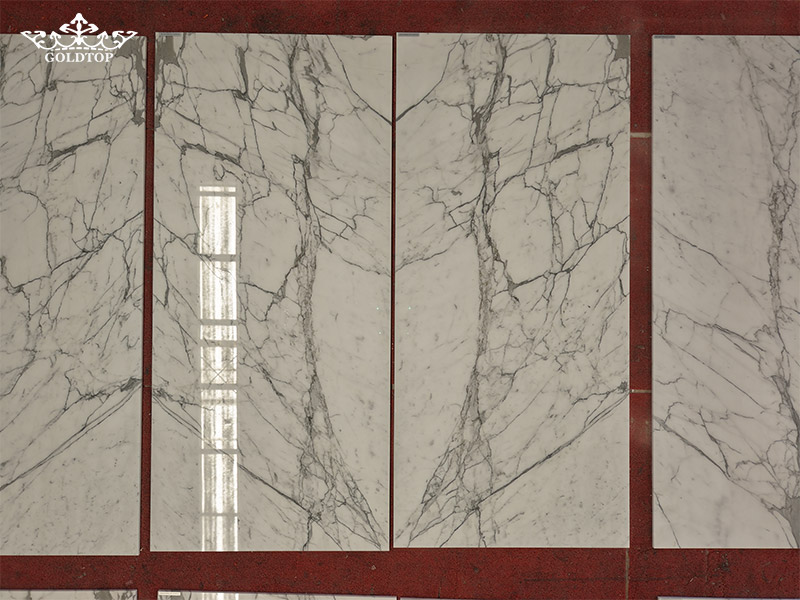
▲ vein matching or bookmatching
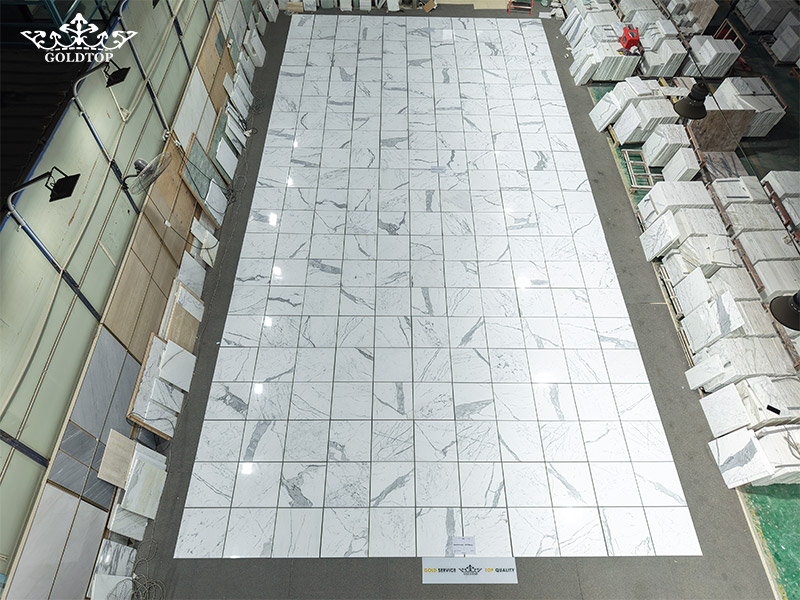
▲ Not vein matching
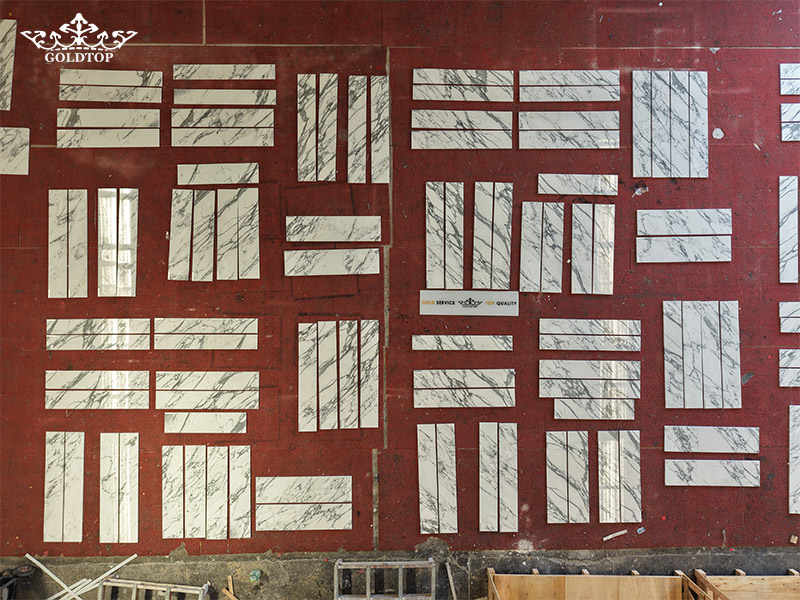
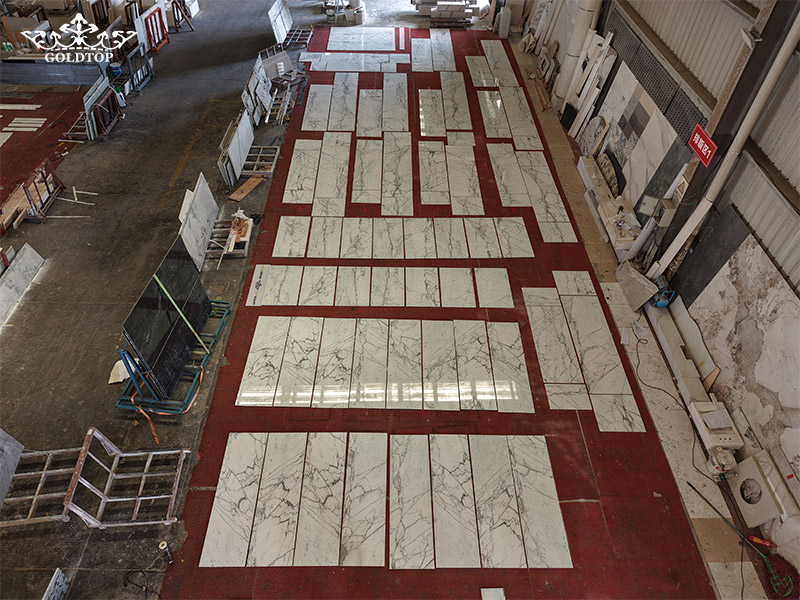
4. Dry-Lay and Confirm Statuary Marble Tiles Before Shipment
For projects using statuary marble tiles or custom-cut floor and wall panels, production inspection should not end when the pieces leave the cutting machine.
For larger projects, we recommend setting up a dedicated inspection area at the factory and arranging the finished pieces according to the approved shop drawings.
This dry-lay process allows the project team to check:
- Background color consistency
- Vein distribution
- Tile sequence
- Dimensions and joints
- Surface finish
- Overall visual balance
If necessary, the arrangement can be photographed and submitted to the client, designer, or project manager for approval before packing and shipment.
This is particularly useful for large-scale marble floor tiles and wall applications, where small differences between individual pieces can become much more noticeable after installation.
5. Use Clean Water During Processing
Water is used throughout the stone fabrication process, including cutting, grinding, polishing, and other finishing operations. Many stone factories use recycled process water after sedimentation for environmental and cost-control reasons.
However, special attention should be paid when processing very light-colored marble such as Statuary Marble.
Water used in previous stone-processing operations may contain residues from polishing compounds, dyes, waxes, or other chemical products. These contaminants may have little visible effect on darker stones but can become noticeable on a white marble surface.
For this reason, clean fresh water is recommended for processing Statuary Marble, particularly during stages where the stone surface is highly exposed and absorbent.
Controlling the water quality helps reduce the risk of discoloration and surface contamination.
6. Repair, Reinforce and Protect the Slabs
Statuary Marble is relatively soft and can be susceptible to cracking during handling, fabrication, transportation, and installation.
Once a block has been cut into slabs, necessary inspection, resin repair, polishing, and reinforcement should be completed as early as appropriate. Back-mesh reinforcement can also help improve handling stability and reduce the risk of breakage during subsequent processing.
This is especially important for large-format slabs and thin marble pieces, where transportation and installation can place additional stress on the material.
Because cracks and repairs can remain visible on a bright white marble surface, prevention is much more effective than relying on repairs after installation.
7. Apply Appropriate Surface Protection Before Shipment
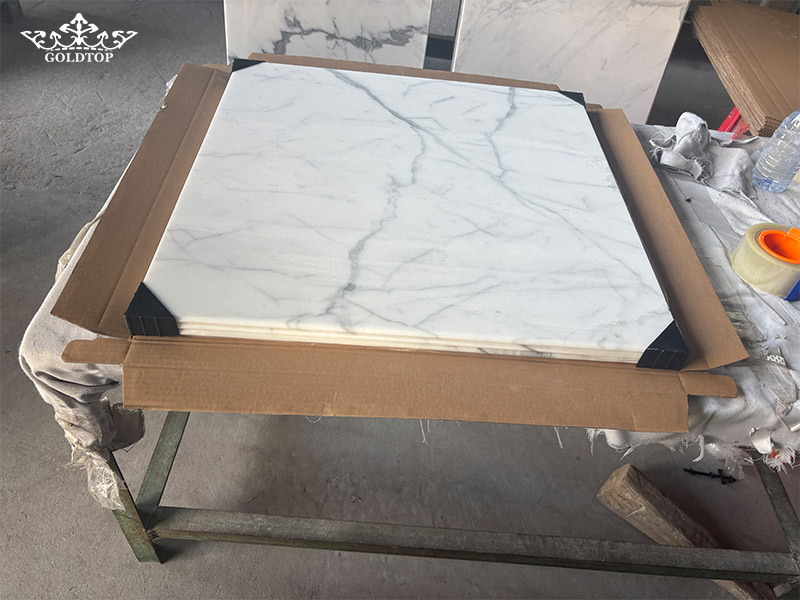
The porous and relatively soft nature of Statuary Marble also means that it requires careful protection against staining and contamination.
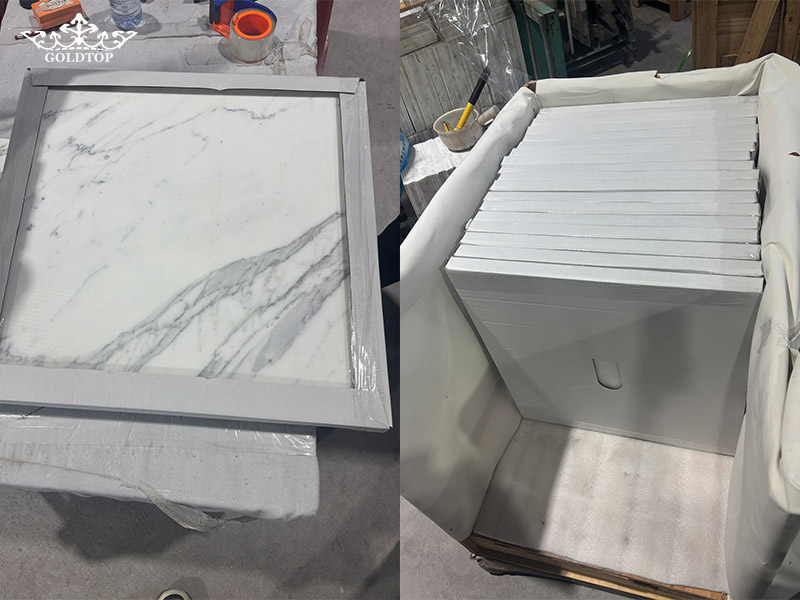
Before shipment, appropriate protective treatment should be considered according to the final application and project requirements. For fabricated marble pieces, six-side protection can provide additional protection during transportation, storage, and installation.
The protection system should be compatible with the stone, adhesive system, and installation method. Proper curing and drying time should also be allowed before packing.
▲ careful protection
▲ six-side protection
From Slab Selection to Finished Installation
The quality of a Statuary Marble project depends on much more than the appearance of the original stone.
From statuary marble slab selection and block matching to cutting, vein layout, dry-lay inspection, reinforcement, protection, and final installation, every stage can influence the finished result.
For high-end marble floor and wall applications, a controlled fabrication process helps maintain a consistent appearance while reducing the risk of cracking, staining, and unexpected color variation.
Our recent Statuary Marble tile project is a good example of why material selection and fabrication planning should be considered together from the beginning of a project.
Looking for Statuary Marble slabs or custom-cut Statuary Marble tiles for your project? Contact us to discuss your material requirements, shop drawings, slab selection, and fabrication options.